
Joseph’s Well
Research-Based, Structured, Verified EBook
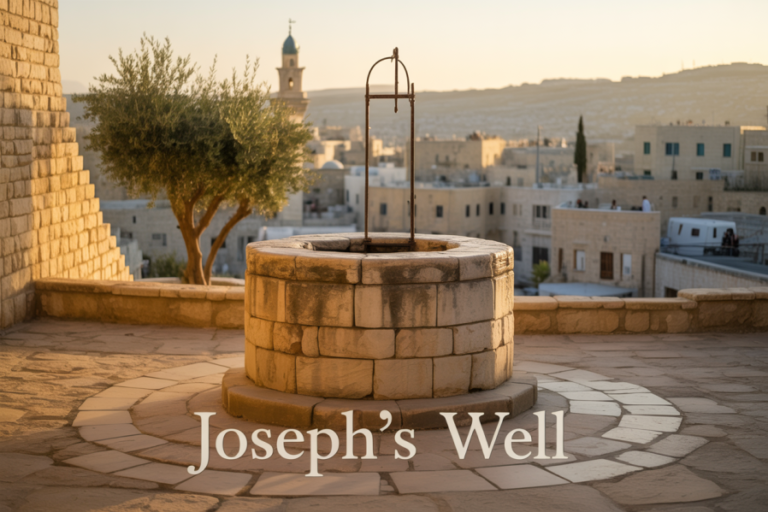
Download Your Copy NowJoseph’s Well Stands As One Of The Most Significant Biblical Sites In Palestine, Drawing Christian Pilgrims And History Enthusiasts To The Ancient City Of Nablus. This Sacred Well, Also Known As Jacob’s Well, Connects Visitors Directly To The Stories Of The Old Testament Patriarchs And Offers A Unique Window Into Biblical Archaeology In Palestine.
This Guide Serves Travelers Planning A Pilgrimage To The Holy Land, History Buffs Interested In Ancient Well Sites, And Anyone Curious About The Spiritual Heritage Of The Middle East. We’ll Explore The Biblical Origins And Deep Significance Of This Sacred Location, Showing You Exactly Where To Find Joseph’s Well In Modern-Day Nablus And What Makes It Such A Powerful Destination For Christian Pilgrimage Sites.
You’ll Also Discover Practical Advice For Planning Your Visit Effectively, Including The Best Times To Experience The Sacred Atmosphere And How To Make The Most Of Your Spiritual Journey To This Remarkable Piece Of Shechem’s Historical Sites.
Discover the Biblical Origins and Significance of Joseph's Well
Explore the Historical Context in Ancient Palestine
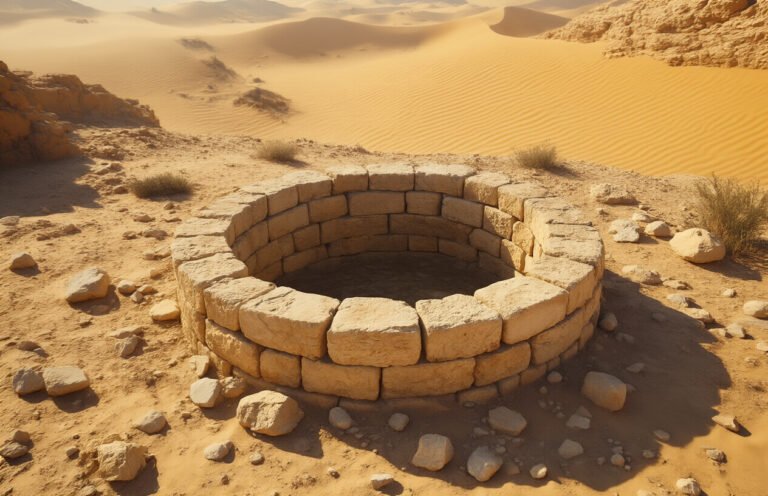
Joseph’s Well stands as a testament to the rich tapestry of ancient Palestinian history, dating back nearly 4,000 years to the patriarchal period. During this era, the region served as a crossroads between Egypt and Mesopotamia, making it a vital hub for trade, migration, and cultural exchange. The well sits in the heart of what was once ancient Shechem, a city that held immense political and religious importance throughout Biblical times.
The Samaritan community, descendants of the ancient Israelites, have maintained an unbroken chain of worship and guardianship at this sacred site. Their presence provides living continuity to the Biblical narratives that unfolded here. Archaeological excavations reveal layers of civilization stretching back to the Bronze Age, with pottery shards, coins, and architectural remains painting a picture of continuous habitation and reverence for this location.
Ancient Palestine’s geography made wells precious commodities, especially in the semi-arid climate of the central highlands. Joseph’s Well wasn’t just a water source—it represented survival, settlement, and divine blessing. The strategic location allowed ancient peoples to establish permanent communities, leading to the development of Shechem as one of the most important cities in Biblical Palestine.
Research-Based, Structured, Verified EBook
Download Your Copy NowUnderstand the Connection to Jacob's Son Joseph
The connection between this sacred well and Joseph, Jacob’s beloved son, runs deep through Biblical narrative and local tradition. Joseph, known for his coat of many colors and his prophetic dreams, received this land as his inheritance from his father Jacob. When the Israelites finally settled in the Promised Land after their Egyptian sojourn, Joseph’s bones were brought back and buried near this very well, fulfilling the promise made centuries earlier.
Local Samaritan traditions preserve detailed accounts of Joseph’s life and his connection to this site. They maintain that Joseph himself drank from these waters and that the well served his household and flocks. The Samaritan chronicles describe how Joseph’s descendants continued to draw water from this source for generations, creating an unbroken link between the patriarch and the present day.
The well also connects to the broader narrative of Jacob’s family settling in Canaan. When Jacob purchased land in Shechem, this area became the first piece of the Promised Land legally owned by the patriarchs. The transaction, recorded in Genesis, establishes the legitimate claim of Jacob’s descendants to this territory, with Joseph’s portion being specifically designated around this well.
Learn About the Well's Mention in Old Testament Scriptures
Scripture references to Joseph’s Well and its surrounding area appear throughout the Old Testament, particularly in Genesis and Joshua. Genesis 33:19 records Jacob’s purchase of the land where the well is located: “And he bought the parcel of ground, where he had spread his tent, at the hand of the children of Hamor, Shechem’s father, for a hundred pieces of money.”
Joshua 24:32 provides perhaps the most direct reference: “And the bones of Joseph, which the children of Israel brought up out of Egypt, buried they in Shechem, in a parcel of ground which Jacob bought of the sons of Hamor the father of Shechem for a hundred pieces of silver: and it became the inheritance of the children of Joseph.”
The book of Joshua also mentions the well in the context of tribal land divisions. When the Israelites divided the Promised Land among the twelve tribes, Joseph’s portion (through his sons Ephraim and Manasseh) included this significant location. The well became a landmark for establishing tribal boundaries and inheritance rights.
Deuteronomy 27 and Joshua 8 reference Mount Gerizim and Mount Ebal, which overlook Joseph’s Well, as sites where the Israelites proclaimed blessings and curses upon entering the land. This geographical context places the well at the center of crucial covenant ceremonies.
Examine Archaeological Evidence Supporting Its Existence
Archaeological investigations at Joseph’s Well reveal compelling evidence supporting its ancient origins and continuous use. Excavations conducted in the 20th and 21st centuries have uncovered pottery fragments dating from the Middle Bronze Age through the Roman period, demonstrating the site’s long history of human activity.
The well itself shows clear signs of ancient construction techniques. Stone-cutting methods and masonry styles match those found at other confirmed Biblical sites from the same period. The depth and construction of the well required significant engineering knowledge and community effort, suggesting its importance to ancient settlers.
Research-Based, Structured, Verified EBook
Download Your Copy NowData Table
|
Archaeological Period
|
Evidence Found
|
Significance
|
|---|---|---|
Locate Joseph's Well in Modern-Day Nablus
Find the exact geographical coordinates and address
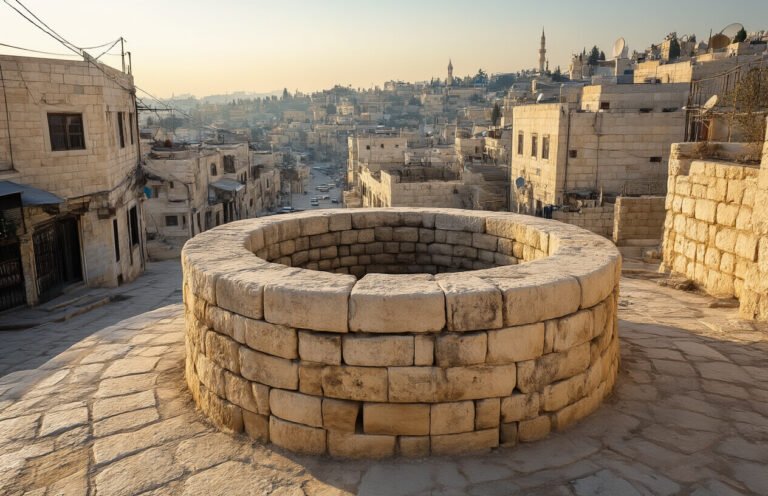
Joseph’s Well sits in the heart of modern-day Nablus, positioned at approximately 32.2108° N latitude and 35.2772° E longitude. The well’s precise location places it in the eastern section of the city, within the boundaries of what was once ancient Shechem. Visitors can find this sacred wells Middle East landmark at the intersection of several key Palestinian neighborhoods, making it accessible from multiple directions.
The well operates under the custodianship of the Greek Orthodox Church, and while there isn’t a standard street address system like Western cities, locals universally recognize the site when you mention “Jacob’s Well” or “Bir Ya’qub” in Arabic. GPS coordinates work reliably for modern navigation apps, though cellular service can be spotty in certain areas of the Palestinian territories.
The Joseph’s Well location benefits from its central positioning within Nablus, making it relatively easy to reach once you’re in the city. The site lies approximately 2.5 kilometers southeast of Nablus city center, nestled in a valley between Mount Ebal to the north and Mount Gerizim to the south. This geographical setting matches perfectly with biblical descriptions of Shechem’s location between these two significant mountains.
Research-Based, Structured, Verified EBook
Download Your Copy NowNavigate the route from major Palestinian cities
Reaching Joseph’s Well from major Palestinian cities requires careful planning and local knowledge. From Ramallah, the most common starting point for international visitors, the journey covers approximately 65 kilometers northward. The route typically follows Highway 60 north through several checkpoints, then branches west toward Nablus via local roads. Travel time varies significantly based on checkpoint delays, ranging from 1.5 to 3 hours.
From Jerusalem to Nablus pilgrimage sites, pilgrims face a more complex journey due to security restrictions. The distance spans roughly 70 kilometers, but the route requires traveling through Ramallah first, adding considerable time and complexity. Direct routes from Jerusalem to Nablus often involve restricted roads that may not be accessible to all visitors.
From Bethlehem, travelers head north through Ramallah before continuing to Nablus, making this approximately a 90-kilometer journey. The route passes through several Palestinian cities and villages, offering glimpses of daily life in the West Bank.
Data Table
|
Origin City
|
Distance
|
Estimated Travel Time
|
Key Checkpoints
|
|---|---|---|---|
Identify nearby landmarks and reference points
The Biblical sites Palestine area surrounding Joseph’s Well offers several distinctive landmarks that help visitors orient themselves. Mount Gerizim towers prominently to the south, its slopes dotted with Samaritan communities and archaeological remains. This mountain serves as the most reliable geographical reference point, visible from kilometers away and mentioned repeatedly in biblical texts.
The ancient Tell Balata archaeological site sits nearby, representing the ruins of biblical Shechem. These excavated remains provide crucial context for understanding the historical significance of the well’s location. Visitors often combine their pilgrimage to Joseph’s Well with exploration of these Shechem historical sites.
Modern Nablus itself serves as a major landmark, with its distinctive Old City featuring narrow stone streets, traditional soap factories, and bustling markets. The city’s minaret-studded skyline and the call to prayer provide unmistakable audio-visual cues for navigation.
The Samaritan Museum on Mount Gerizim offers another reference point, particularly valuable for those interested in the continuing Samaritan community’s connection to this region. Road signs in Arabic, Hebrew, and sometimes English mark the general area, though specific directional signs to the well may be limited.
Local landmarks include several mosques, churches, and schools that longtime residents use for giving directions. The nearby Balata refugee camp, while not a tourist destination, serves as a recognizable reference point that appears on most detailed maps of the region.
Experience the Sacred Atmosphere and Spiritual Significance
Research-Based, Structured, Verified EBook
Download Your Copy NowWitness the Deep Stone Construction and Ancient Architecture
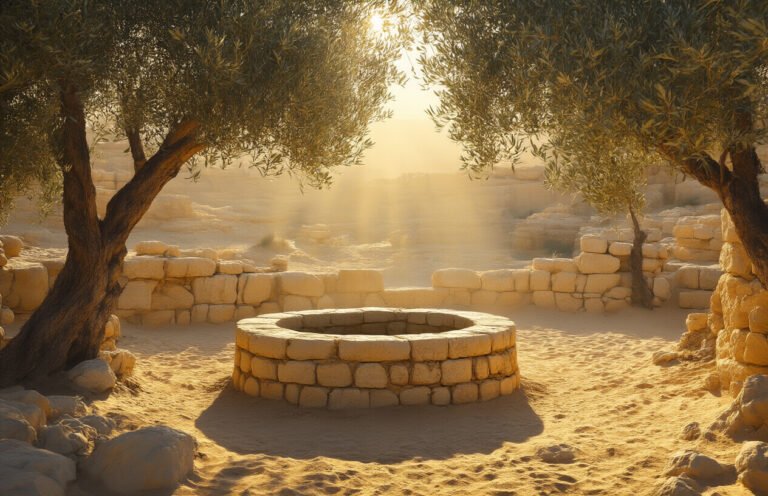
The moment you approach Joseph’s Well, the sheer craftsmanship of ancient builders becomes immediately apparent. The well’s stone construction tells a story that spans millennia, with layers of history visible in every carefully placed block. The circular stone walls descend deep into the earth, their surfaces worn smooth by countless hands that have drawn water from this sacred source over thousands of years.
Archaeological evidence suggests the well’s construction techniques date back to biblical times, with some sections potentially reaching back to the period when Jacob first settled in the area. The stonework displays the characteristic precision of ancient Middle Eastern builders, with each stone fitted without mortar yet remaining structurally sound after centuries of use. Visitors often marvel at how the ancient craftsmen managed to carve and position these massive stones without modern equipment, creating a structure that continues to function today.
The well’s mouth is surrounded by traditional stone benches where pilgrims gather to rest and reflect. These seating areas, worn smooth by generations of visitors, create natural gathering spaces that encourage contemplation and community among those who make the journey to this Biblical sites Palestine location.
Feel the Connection to Thousands of Years of Religious History
Standing beside Joseph’s Well creates an almost tangible connection to biblical narratives that shaped three major world religions. This isn’t just a historical site—it’s a place where you can literally touch the same stones that biblical figures may have encountered. The weight of history here goes beyond intellectual understanding; it becomes a visceral experience that connects modern pilgrims to their spiritual ancestors.
The well serves as a physical anchor point for stories that have been passed down through generations. When you place your hand on the worn stone rim, you’re touching the same surface that has witnessed countless prayers, celebrations, and moments of spiritual significance. Many visitors report feeling an unexpected emotional response when they first encounter the well, describing a sense of coming home or completing a long-anticipated journey.
Religious historians point to this site as one of the few locations where the physical and spiritual worlds intersect so dramatically. The continuity of worship and reverence at this location creates layers of spiritual energy that many pilgrims find deeply moving. Whether you approach from a Christian, Jewish, or Islamic perspective, the well represents a shared heritage that transcends denominational boundaries.
Participate in Traditional Prayers and Rituals at the Site
The spiritual practices at Joseph’s Well reflect the diverse religious traditions that hold this site sacred. Christian pilgrims often gather for prayer services, particularly during significant religious seasons like Lent and Advent. These gatherings typically include readings from the Gospel accounts of Jesus’s encounter with the Samaritan woman, creating a direct connection between scripture and place.
Jewish visitors frequently recite prayers that acknowledge the patriarchal connections to the site, honoring Jacob’s presence in the area and the well’s role in the settlement of the chosen people in the promised land. Traditional blessings over water take on special meaning when performed at this ancient source.
The local Samaritan community maintains their own unique traditions at the well, performing rituals that have been preserved for centuries. Their practices offer visitors a glimpse into one of the world’s oldest continuous religious traditions, providing insights into how ancient worship practices have evolved while maintaining their essential character.
Many pilgrimage groups coordinate their visits to allow for interfaith dialogue and shared worship experiences. These gatherings demonstrate how sacred spaces can bring people together across religious boundaries, fostering understanding and mutual respect.
Understand the Well's Importance to Multiple Faiths
Joseph’s Well stands as a remarkable example of interfaith significance, holding deep meaning for Christianity, Judaism, and Islam. For Christians, the site represents the location of Jesus’s transformative conversation with the Samaritan woman, a pivotal moment that broke social barriers and expanded the message of salvation beyond traditional boundaries. This encounter, recorded in the Gospel of John, transformed both the woman and her entire community, making the well a symbol of evangelical outreach and social reconciliation.
Jewish tradition connects the well to the patriarch Jacob, who purchased land in this area and dug the well to provide water for his family and livestock. This connection makes the site significant as part of the patriarchal narrative that forms the foundation of Jewish identity and connection to the promised land. The well represents continuity with ancestral traditions and the fulfillment of divine promises about the land of Israel.
Islamic tradition also recognizes the site’s significance, honoring both Jacob (Yaqub) and Jesus (Isa) as important prophets. The well’s association with these revered figures makes it a place of respect and pilgrimage for Muslim visitors who come to honor the prophetic tradition and connect with shared Abrahamic heritage.
Research-Based, Structured, Verified EBook
Download Your Copy NowData Table
|
Faith Tradition
|
Key Figure
|
Significance
|
Pilgrimage Practices
|
|---|---|---|---|
Plan Your Pilgrimage Visit Effectively
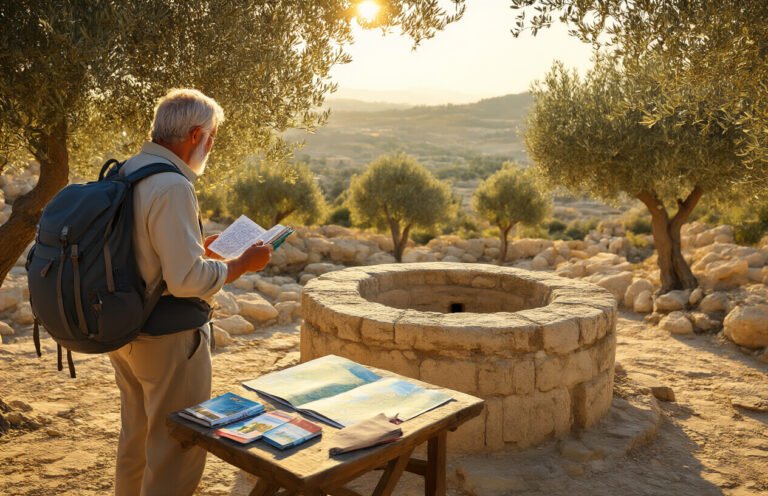
Choose the best seasons and times for visiting
Prepare necessary documentation and permits
Select appropriate clothing and cultural considerations
Research-Based, Structured, Verified EBook
Download Your Copy NowBudget for transportation and local guide services
Book nearby accommodations in Nablus or surrounding areas
Maximize Your Educational and Spiritual Journey
Connect with Local Religious Scholars and Historians
Building meaningful connections with local experts transforms your visit to Joseph’s Well from a simple sightseeing trip into a profound educational experience. Nablus hosts a vibrant community of Samaritan priests, Christian theologians, and Islamic historians who possess generations of knowledge about this sacred site and the broader Shechem historical sites.
Start by reaching out to the Samaritan community through their cultural center in Nablus. The Samaritans maintain the oldest continuous religious tradition connected to Joseph’s Well, and their high priest often welcomes respectful visitors who show genuine interest in learning. Their oral traditions provide insights you won’t find in any guidebook, particularly regarding the well’s role in daily Samaritan worship and its connection to their ancient scriptures.
Local Palestinian historians offer another valuable perspective, especially regarding the archaeological layers of Nablus and how Joseph’s Well fits into the broader context of Biblical archaeology Palestine. Many speak excellent English and appreciate the opportunity to share their research with international visitors.
Contact universities in the region, particularly An-Najah National University in Nablus, which often has archaeology and religious studies departments willing to arrange meetings with faculty members. These scholars can provide academic context for what you’re seeing and help you understand the historical debates surrounding the site’s authenticity.
Don’t overlook local Christian communities either. Orthodox, Catholic, and Protestant churches in the area each maintain their own traditions about Joseph’s Well and can offer different theological perspectives on its significance in Christian pilgrimage sites.
Document Your Experience Through Photography and Journaling
Capturing your Joseph’s Well experience requires more than just snapping photos. Create a comprehensive record that preserves both the visual beauty and spiritual impact of your pilgrimage to this ancient well Holy Land.
Photography at religious sites demands sensitivity and respect. Always ask permission before photographing people, especially during prayer or worship. The well itself offers stunning opportunities for architectural photography, particularly the interplay of ancient stonework with natural lighting. Early morning and late afternoon provide the best lighting conditions, casting dramatic shadows that emphasize the well’s age and significance.
Focus on details that tell the story: weathered stone surfaces, worn steps leading down to the water, the hands of pilgrims touching the ancient walls. These intimate shots often prove more meaningful than wide landscape photos. If permitted, capture the actual well opening and the depth that speaks to centuries of use.
Your journal should go beyond basic travel notes. Record conversations with local people, your emotional responses to different moments, and reflections on how the experience connects to your spiritual journey. Write about the sounds: the echo of your voice in the well chamber, the call to prayer from nearby mosques, the whispered prayers of fellow pilgrims.
Document practical information too: the best times to visit for solitude, which entrances offer easiest access, and any seasonal variations in accessibility. Future pilgrims will appreciate these details, and you’ll value them if you return.
Explore Nearby Biblical Sites and Ancient Ruins
The area surrounding Joseph’s Well contains a treasure trove of Biblical sites Palestine that enhance your understanding of the region’s sacred history. Planning a systematic exploration of these connected locations creates a comprehensive pilgrimage experience that contextualizes your visit within the broader narrative of ancient Israel.
Mount Gerizim rises prominently near Nablus and holds special significance for Samaritans, who consider it the true location of God’s chosen holy mountain. The summit contains ruins of ancient temples and offers panoramic views of the valley where Joseph’s Well sits.Archaeological excavations have revealed layers of human habitation spanning thousands of years.
The ancient city of Shechem lies partially excavated near modern Nablus. Archaeological evidence confirms this was indeed a major Canaanite and later Israelite city, lending credibility to the Biblical accounts associated with Joseph’s Well. The site includes remains of city walls, gates, and residential areas that help visitors visualize life during Biblical times.
Sebastia, ancient Samaria, sits about 12 kilometers northwest and represents the capital of the Northern Kingdom of Israel. The extensive ruins include a Roman theater, Byzantine church remains, and Herodian palace foundations. This site connects directly to the stories of the Samaritan woman at the well and provides broader historical context.
Consider visiting Tell Balatah, identified by many archaeologists as Biblical Shechem. Recent excavations have uncovered structures dating to the Middle Bronze Age, potentially contemporary with the Biblical patriarchs. The proximity to Joseph’s Well makes this an essential stop for serious students of Biblical archaeology.
Plan your route efficiently by consulting local guides who understand current access restrictions and the best sequence for visiting multiple sites. Many locations require advance coordination with Palestinian tourism authorities, and some areas may have limited hours or seasonal accessibility restrictions.
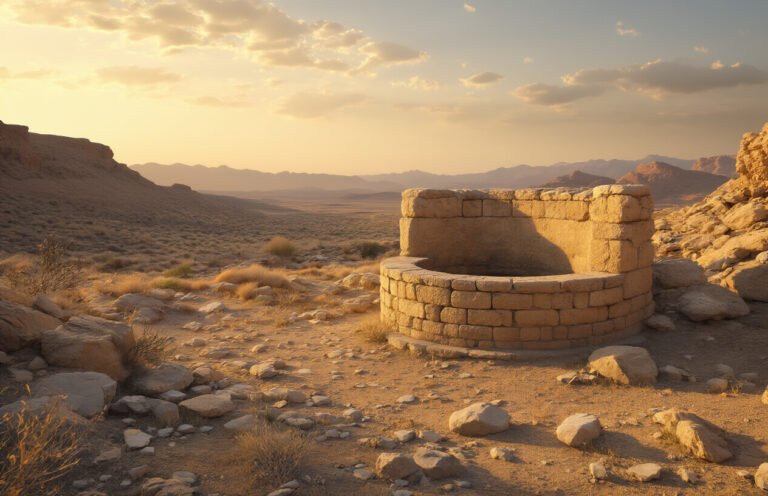
Joseph’s Well stands as more than just an ancient water source—it’s a living connection to one of the Bible’s most compelling stories. When you visit this sacred site in Nablus, you’re walking in the footsteps of countless pilgrims who have sought spiritual meaning in this humble yet profound location. The well offers a unique opportunity to connect biblical history with your personal faith journey, creating memories that will deepen your understanding of scripture.
Planning your visit carefully will help you get the most out of this spiritual experience. Take time to research the site’s history beforehand, dress appropriately for the sacred setting, and consider hiring a local guide who can share insights you might otherwise miss. Whether you’re traveling solo or with a group, Joseph’s Well has the power to transform a simple pilgrimage into a life-changing encounter with ancient faith and modern devotion.